Battery Operated Christmas Lights: When They Make Sense
Battery operated Christmas lights make sense for short runs with no nearby outlet, such as wreaths, a porch railing, a mantel or a detached fence. For long roof lines or big trees, plug-in outdoor LED strings are cheaper to run and easier to keep lit. For outdoor use, buy only sets marked as outdoor rated.
As an Amazon Associate we earn from qualifying purchases. Buttons open Amazon search results, so check the reviews, size and price before you buy. We haven't tested these products ourselves.
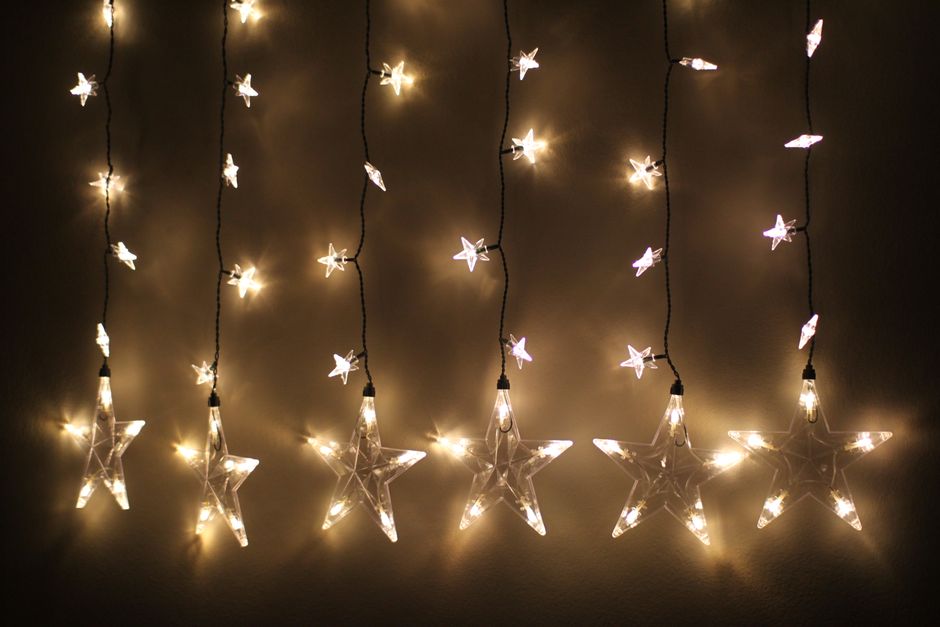
Photo by ko tek on Pexels
Battery lights are a good match for small, scattered spots and a poor match for large displays. Three things decide the purchase: how far the spot is from a safe outlet, how many hours a night the lights will run, and whether the set is rated for the weather where you hang it. Everything else, such as color modes and remotes, matters less.
When battery lights make sense
- No outlet within reach. Detached fences, mailbox posts, garden beds, pergolas and a front door wreath are all awkward to power with a cord.
- Short runs. One or two strings, roughly 15 to 35 feet each, cover most railings, wreaths, mantels and small trees.
- Indoor spots where a cord is a tripping hazard. Think stair banisters, shelves and window frames.
- Temporary or rental setups. Nothing needs wiring, and you can move a set if it looks wrong.
They make less sense for a full roof line, a large tree or a display that runs all evening for weeks. You would be swapping batteries constantly. Plug-in outdoor LED strings are the better tool there. Nearly all of those runs need a GFCI protected outlet, which is covered below.
Outdoor ratings: the part people skip
Battery power does not make an indoor set weatherproof. ESFI says to make sure extension cords and decorations are rated for proper use, and that outdoor lights should be plugged into GFCI protected outlets. The GFCI advice applies to plug-in sets. A battery set avoids that point, but the rating still matters because rain and snow get into the battery box and connections.
One buying source notes that outdoor battery lights need to be outdoor rated and have the correct IP rating. On the box, look for these:
- A clear statement that the set is for outdoor use, not just a "water resistant" line in the marketing.
- An IP rating. Higher second digits mean better protection from water. Check what the number means before you rely on it for a spot that gets driving rain.
- A sealed or covered battery box. This is usually the first part to fail in wet weather.
- A safety certification mark such as UL or ETL where one is listed.
Also put the battery box where water cannot pool. Tape or tuck it under an eave, inside a planter, or behind a post, with the cover facing down.
How much to buy for a typical house
Measure first. A string that is too short leaves a gap, and extra string is awkward to bunch up. Use a soft tape or a piece of rope laid along the route, then measure the rope.
- Front door wreath: one string of about 10 to 16 feet.
- Porch railing: one to two strings, depending on how you wrap it (see below).
- Mantel: one string equal to the mantel length plus 3 to 4 feet for drape.
- Tabletop or 4 to 5 foot tree: roughly 100 to 300 lights is a common range, which usually means one or two battery strings.
- Window frame: add up the four sides, then add a foot for each corner or clip point.
Worked example: a 30 foot porch railing
Say you want a spiral wrap around a 30 foot railing. A straight line along the top rail needs about 30 feet. A loose spiral around the rail and balusters uses roughly twice that, so plan on about 60 feet. Those are our planning numbers, not a standard.
- Straight line: one 33 foot string covers it, with 3 feet to hide the battery box.
- Spiral wrap: two 33 foot strings give 66 feet, so each one wraps 15 feet of railing. Each string has its own battery box, so you need two sets of batteries.
- Runtime: suppose the box is rated for 60 hours of use (check your own set, this is a hypothetical number). On a timer for 6 hours a night, that is about 10 nights per set of batteries. Over a 30 night season you would change batteries about twice.
If that sounds like too many swaps, a plug-in outdoor LED string on a timer is the better pick for that railing, as long as an outlet is within reach.
See outdoor battery string lights with timers
Power: batteries, runtime and cold
Most sets run on AA or D cells in a box that holds three or more. Larger cells usually last longer, and the box is bigger. Rechargeable cells work in many sets, but check the box, because some strings need the higher voltage of fresh alkaline cells.
Cold shortens runtime. One source suggests choosing lights labeled lithium compatible for extended outdoor use in cold climates. If you live somewhere with hard freezes, that is worth checking on the package.
A timer is the single most useful feature. It makes the lights run a fixed number of hours, which stretches the batteries and saves you from going outside to switch them on. ESFI also says to turn off indoor and outdoor decorations before you go to sleep or leave home. A built-in timer does that for you. Look for a timer that repeats daily rather than one that runs once.
Shop battery lights with a repeating timer
Battery vs. plug-in vs. solar
| Type | Best for | Upfront cost | Running cost | Main drawback |
|---|---|---|---|---|
| Battery operated | Wreaths, railings, mantels, no outlet nearby | Low to medium | Ongoing battery cost | Batteries die, especially in cold |
| Plug-in LED | Roof lines, trees, long runs | Low to medium | Low | Needs outlet, GFCI and cords |
| Solar | Garden beds, fences in sunny spots | Medium | None | Weak in short, cloudy winter days |
For a rough rule, if the run is under about 35 feet and no outlet is close, use batteries. If the run is longer than about 70 feet, or you want the lights on most of the evening, use plug-in.
See plug-in outdoor LED strings for longer runs
Choosing the string itself
- Wire color: green or white wire disappears on a wreath or tree. Clear or copper wire works on a mantel or garland. Thin copper wire is fine indoors, but check that the outdoor version is rated for outside use.
- Bulb spacing: closer spacing, such as 2 to 4 inches, looks fuller on a small tree. Wider spacing suits a long railing.
- Warm white vs. cool white: warm white looks closer to traditional bulbs. Cool white looks bluer and sharper against snow.
- Steady-on mode: many sets include flashing and chasing modes. Make sure a steady mode is easy to select and remembered after the timer cycles.
- Remote: useful when the battery box is up high or hidden. Not essential.
Shop green wire battery lights for wreaths and trees
See copper wire battery lights for mantels
Mounting and storage
Hang outdoor lights with clips made for the surface, not nails or staples. A state fire safety sheet warns that nails or staples used to hang lights can damage the cord. Use the right ladder on a flat surface, because falls are the common injury. The same advice from ESFI is to stay at least 10 feet from power lines.
At the end of the season:
- Take the batteries out. Leaking cells can ruin the box and the contacts.
- Dry the string fully before packing it.
- Wind it around a piece of cardboard or a reel, with the battery box taped to the end.
- Label the length and where it goes so next year takes five minutes.
Common mistakes
- Using an indoor set outside. Rated for indoors means it is not designed for moisture. One roundup lists the lack of an IP rating as a cause of condensation, corrosion and early failure.
- Buying one long string for a long run. Voltage and runtime drop as strings get longer. Two shorter sets with their own boxes are usually more practical.
- Leaving the battery box facing up. Water gets in through the cover seam.
- Skipping a timer. You will forget to switch them off, and the batteries will run out in the first week.
- Not carrying spares. Buy extra batteries when you buy the lights. Mixing old and new cells shortens life.
- Not checking the string. ESFI advises you to always inspect your lights and other decorations before use. Replace sets with cracked wire or a damaged box.
We have not tested any of the products linked here. Use the checklist above, read the package specifications, and compare the details listed by each seller.
Shop AA batteries for light strings
Common questions
Can battery operated Christmas lights be used outside?
Yes, but only sets marked for outdoor use. A battery does not make an indoor set weatherproof. Look for an outdoor statement, an IP rating and a sealed battery box.
How long do battery Christmas lights last?
It depends on the cell size, the number of bulbs, the temperature and the mode. Check the runtime on the package, then divide by your nightly hours. A timer is the easiest way to stretch it, and cold weather shortens it.
How many battery strings do I need for a 30 foot railing?
One 33 foot string covers a straight line along the top. A spiral wrap needs about twice the length, so plan on two 33 foot strings, each with its own battery box.
Do battery lights need a GFCI outlet?
No, because they do not plug in. GFCI protection applies to plug-in outdoor lights and cords, which ESFI says should connect to GFCI protected outlets.