Christmas Garland for Stairs: Sizing and Safe Hanging
Measure the handrail, then buy that length for a tight look or about 1.5 times that length for swags, plus about 3 feet if you want it to drop past the newel post. Fasten it with zip ties or twist ties so the rail still works as a handrail, and only use lighted garland that is tested by a recognized lab.
As an Amazon Associate we earn from qualifying purchases. Buttons open Amazon search results, so check the reviews, size and price before you buy. We haven't tested these products ourselves.
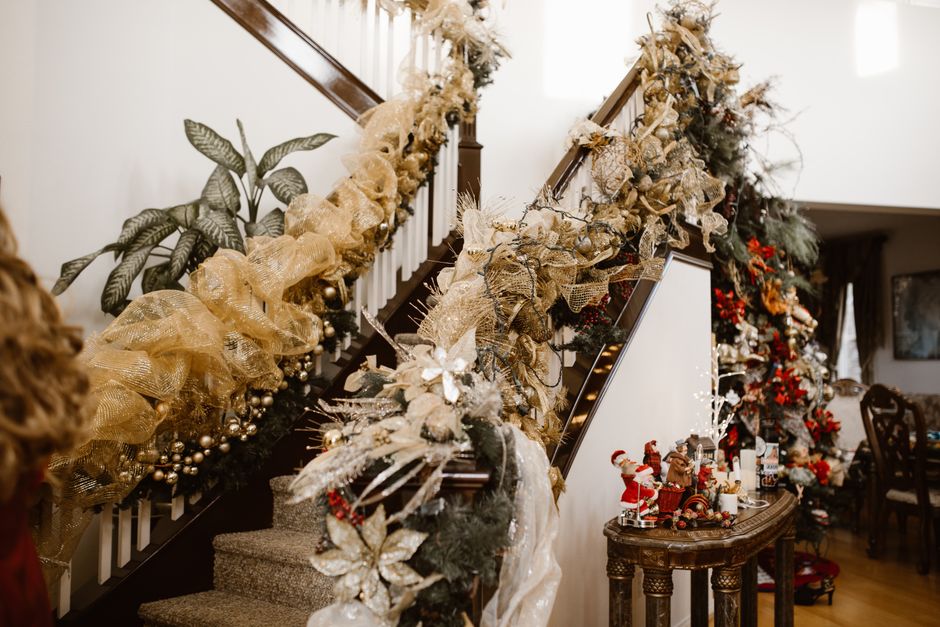
Photo by RDNE Stock project on Pexels
Three things decide this purchase: how much garland you need, whether it is rated for where it will hang, and whether it has lights. Get the length wrong and you end up with a bare patch at the bottom of the stairs. Get the rating wrong and an indoor piece falls apart on a porch rail. Get the lights wrong and you add a cord, an outlet problem and a fire consideration to a staircase people use every day.
Measure the staircase first
Measure the handrail itself, not the stairs. Start at the inside of the newel post and run the tape up the handrail to the next newel post or the end of the rail. Repeat for each section, such as a landing or a second flight, and measure the newel post from top to floor if you want garland to drape down it.
Then pick a look, because the look sets the length:
- Tight to the rail: the garland needs to be the same length as the handrail.
- Swagged in loops: measure the handrail and multiply by 1.5. Another source suggests adding about 25 to 50 percent extra for draping.
- Hanging past the newel post: add about three feet to your measurement.
Another rule of thumb is to add about 1 foot per swag if you plan to loop the garland instead of laying it on top of the rail. Buy a little extra. A short strand is the one mistake you cannot hide.
Worked example: a 30-foot railing
Say a stair rail plus an upstairs landing rail adds up to 30 feet. Garland commonly comes in strands of 6 feet, so the math looks like this:
- Tight look: 30 ft plus 3 ft for the newel drop is 33 ft. That is 6 strands (36 ft), leaving 3 ft to hide the joins.
- Light swag: 30 ft x 1.25 is 37.5 ft, plus 3 ft is 40.5 ft. Buy 7 strands (42 ft).
- Full swag: 30 ft x 1.5 is 45 ft, plus 3 ft is 48 ft. Buy 8 strands.
For a shorter 12-foot straight rail with full swags, 12 x 1.5 is 18 ft, plus 3 ft is 21 ft. That is 4 strands of 6 feet. Join strands by securing each new piece beside the last so the two read as one run, and hide the joint with ribbon or a bow.
Garland types compared
| Type | Best for | Watch for | Relative price |
|---|---|---|---|
| Plain artificial pine | Indoor rails, easy layering with ribbon | Thin strands look sparse once swagged | Low |
| Pre-lit artificial, plug-in | Staircases near an outlet | Cord routing, lab listing, indoor or outdoor rating | Medium |
| Pre-lit, battery with timer | Stairs with no nearby outlet, renters | Battery life, changing batteries on a long run | Medium |
| Outdoor-rated artificial | Porch and deck rails, exposed stairs | Must say outdoor use, plug must suit a GFCI outlet | Medium to high |
| Fresh greenery | Short seasons, scent | Dries out, needs floral wire, messy indoors | Medium to high |
Fullness, color and weight
Fullness matters more than length once you swag. A thin strand stretched into loops looks flat, so many people double up strands for a fuller look. Heavier, fuller garland also needs more attachment points, and a rail with fixed balusters gives you more places to tie than a bare wall. Choose a green that works in your light. Dark green reads well on light wood. Blue-green tips and frosted pieces suit white railings.
If you plan to add ribbon, pine cones or ornaments, buy the garland first and add those after it hangs. Ribbon should be hung with some slack rather than pulled taut.
Pre-lit or add your own lights
Pre-lit garland saves you from wrapping, and the lights stay evenly spaced. If you add your own, find the middle of the garland and wrap it with lights from there. Either way, check the listing. CPSC advises that indoors or outside, you should use only lights that have been tested for safety by a recognized testing laboratory. ESFI says the same and names UL, Intertek or CSA as examples.
Power: plugs, cords and limits
A staircase is often far from an outlet, so the cord decides where the lighted garland can go. Keep these limits in mind:
- Do not chain too many incandescent sets. CPSC says to never string together more than three sets of incandescent lights and never overload electrical outlets. LED sets usually allow longer runs, but follow the maximum printed on the package.
- Match the extension cord to the load. ESFI advises you to match the power needs (amperage) of electrical products with the amperage rating of extension cords.
- Do not daisy-chain cords. Fire safety guidance says do not plug extension cords into one another.
- Keep heat away. ESFI says to keep all decorations at least 3 feet away from heating equipment or an open flame. That includes a floor vent or radiator at the foot of the stairs.
- Turn them off. Turn off all indoor and outdoor electrical decorations before leaving home or going to sleep. A plug-in timer handles this without effort.
Battery garland avoids cords altogether, which also helps where children or pets share the stairs. It costs more in batteries over a season, so look for a timer function.
Outdoor porch and deck stairs
Outdoor stairs need garland and lights marked for outdoor use. ESFI says all extension cords and electrical decorations used for outdoor decorating should be marked for outdoor use. It also says outdoor electric lights and decorations should be plugged into GFCI-protected circuits. If your outdoor outlet is not protected, portable outdoor GFCIs can be bought where electrical supplies are sold and need no special installation.
Weather adds a few more rules. Keep cords and light strings clear of snow and standing water, and keep connections off the ground. Fasten lights securely to firm supports against wind, without damaging the cord insulation. Do not use staples or nails, since they can damage the cord. On a ladder, use wooden or fiberglass ladders when decorating outdoors.
How to hang it safely
- Start at the top. Attach one end of the garland directly to the banister at the top of the rail. That way any excess or shortfall ends up at the floor instead of at the top of the stairs.
- Fasten every few feet. Move down the stairs a few feet and attach again, either draping for a swag or keeping it tight to the rail.
- Choose a fastener that does not damage the rail. Zip ties are popular because, as one author notes, they hold garland securely without drilling holes or using nails. Green twist ties work too. Clear adhesive hooks suit spindles and walls. For a delicate finish, add a little felt or soft fabric underneath to prevent scratches.
- Finish at the newel post and let any extra hang down.
- Test the rail. Leave your hand a clear path, especially if children or older guests use the stairs. If a hand cannot slide along the rail, pull the garland to the outside edge or lift the swags higher.
Do not hang decorations over the treads, and do not run a cord across a step. Both are trip hazards on a surface where people already carry things.
Storage and common mistakes
Strands are bulky, so plan storage when you buy. Loosely coil each strand, secure it with a tie, and keep pre-lit pieces in a box or bag with the plug accessible. Do not tug lights off a rail. Unclip the fasteners and unwind. Inspect each set when you take it out next year, and check for broken or cracked sockets, frayed or bare wires and loose connections, and discard damaged sets.
- Buying to the exact rail length and wanting swags after.
- Using indoor lights or cords on an outdoor rail.
- Hiding a cord under a rug or pinching it in a door.
- Using too few attachment points, so heavy garland sags by New Year.
- Skipping the handrail test and leaving the rail unusable.
We have not tested any of the product types above, so check each listing for its stated length, indoor or outdoor rating, lab listing and maximum connected sets before you order.
Common questions
How much garland do I need for a staircase?
Measure the handrail. For a tight look, buy that length. For swags, multiply by about 1.5. Add about 3 feet if you want garland to hang down the newel post. With 6-foot strands, round up to the next whole strand.
How do I hang garland on stairs without damaging the railing?
Zip ties or twist ties around the garland and rail hold well without nails or holes. Clear adhesive hooks work on spindles and walls. Add a bit of felt under the ties on a painted or stained rail.
Can I use indoor pre-lit garland on an outdoor staircase?
No. Use only garland, lights and extension cords marked for outdoor use, and plug them into a GFCI-protected outlet. Keep connections out of snow and standing water.
How many strands of lights can I connect?
CPSC and ESFI both say never connect more than three sets of incandescent lights together. For LED garland, follow the maximum run printed on the packaging.
Sources
- Electrical Safety Foundation International (ESFI): Decorate Your Home Safely During The Holidays
- Electrical Safety Foundation International (ESFI): Outdoor Decoration Safety Tips
- U.S. Consumer Product Safety Commission (CPSC): Holiday Safety Tips
- The Creek Line House: How to Hang Garland on Stair Railings